

Maldivian Democratic Party (MDP) concluded its three-day congress on Saturday amidst shouting, disputes over speaking opportunities and questions surrounding the internal procedures that will determine its National Council election as it announced the poll would take place on 27 November.
The congress took place at Malé City Hall and its surrounding premises from 1 to 3 October, with close to 1,000 delegates registered for the event.
Questions surrounding the internal democracy of the MDP have been raised even before the congress began.
Former Baarah MP Ahmed Abdulla questioned the legal standing of decisions made by the existing council, saying its elected term had already expired, after the council had decided to extend its term until the congress and decided the election for a new council should take place after the meeting.
MDP Deputy Chairperson Mohamed Shifaz dismissed claims of the council's decisions being unconstitutional.
Tensions were also present inside the congress.
Former President Ibrahim Mohamed Solih, who gave the welcome speech during the opening of the congress, urged members not to allow competition over the party's 2028 presidential ticket to affect the longstanding relationships that the party held, saying disagreements within the party should not make members enemies.
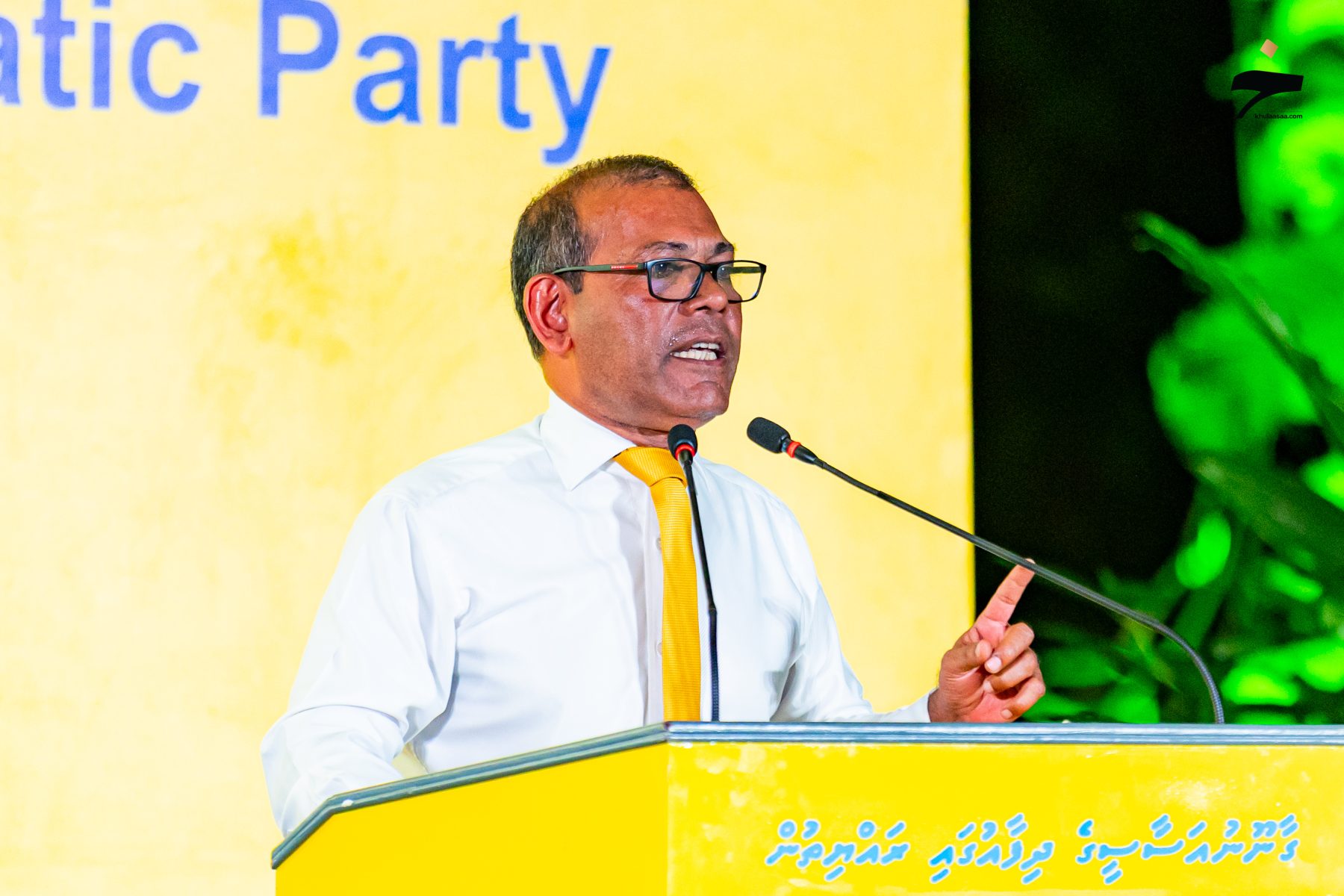
However, shouting broke out in the congress at times, including when the speech of Chairperson Mohamed Nasheed was disrupted in the presence of foreign diplomats and other guests.
Disputes continued on the final day of the congress.
Former Madaveli MP Mohamed Nazim was part of members who raised concerns over speaking opportunities during the congress, with Nazim accusing the chair of favouring certain members, while Nasheed denied the accusation.
The exchange prompted objections from delegates, with some accusing Nasheed of not being truthful, and loud exchanges and heckling followed.
Despite the disputes, delegates approved major changes to the MDP's internal procedures.
Constitutional amendments proposed by former MDP Chairperson Fayyaz Ismail were passed by the delegates with 546 votes in favour and 19 against, abolishing the positions of party president and vice-president and making the chairperson the highest-ranking party official.
The amendments also require members to have held party membership for at least three months before becoming eligible to vote for internal elections.
Delegates also approved the "Bodu Badhalu" reform resolution supported by Nasheed and Fayyaz, which passed with the support of 520 out of the 563 delegates who voted.
At the end of the congress, Nasheed announced the election for the party's new National Council would take place on 27 November.
The announcement comes after MDP National Council had decided that elections for a new council should take place after the congress. Questions have now arisen as to the relevance of the 27 November date in light of the timeline approved by the council.
The MDP congress took place two weeks after the ruling People's National Congress (PNC) ended its own national congress at the Social Centre.
The PNC congress took place from 15 to 18 September and involved over 1,300 delegates, with internal leadership elections taking place electronically throughout the event.
The congress also approved a resolution giving President Dr Mohamed Muizzu the PNC presidential ticket for the 2028 election. All 1,119 members who participated in that vote supported the resolution.
PNC Chairperson Abdul Raheem Abdulla then described the gathering as the most organised political congress held in the Maldives, while President Muizzu said the party remained united behind its "nation first" policy.
Nasheed himself attended the opening of the PNC congress after he had been invited, and was welcomed by President Muizzu.
The MDP leaves its congress having approved substantial changes to its leadership procedures and set a date for the election of its new National Council.
At the same time, disputes over speaking opportunities, questions surrounding the term of the outgoing council and the shouting witnessed at the congress have once again placed the internal democracy of the country's main opposition party in the spotlight.


Comments
0 comments